CTK – Sacrifice- Prayer Resources – W/C 31/3/2025
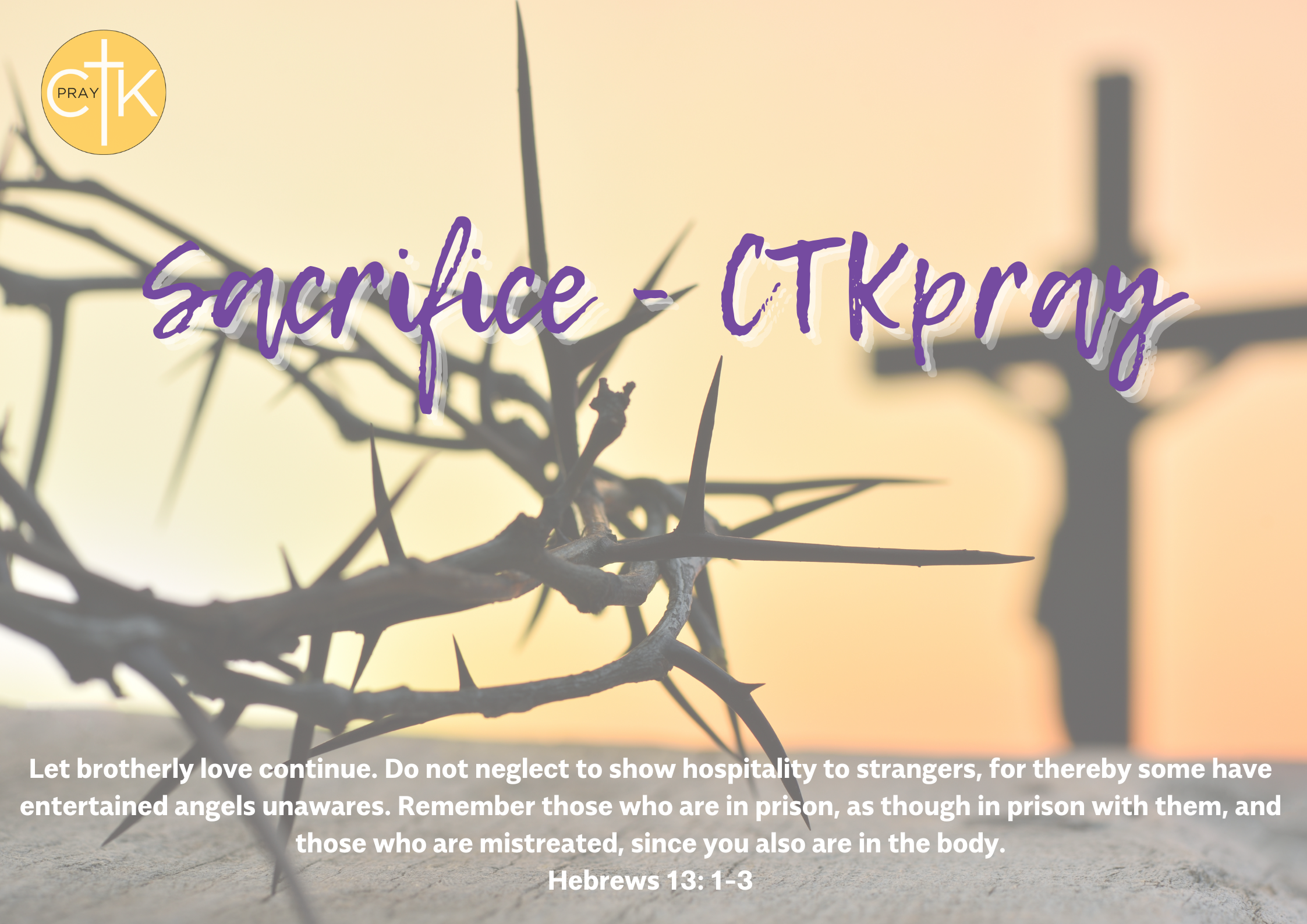
Hello everyone, and welcome back to CTKPray. The prayer theme for this week is Sacrifice.
Sacrifice is a way of strengthening our relationship with God and demonstrating self-discipline. It is an act of love that reflects our willingness to put others before ourselves and to give up something valuable for a greater purpose. Just as self-denial teaches us self-control and dependence on God, sacrifice invites us to embrace selflessness and deepen our faith. During Lent, sacrifice is a way of uniting ourselves with Jesus’ suffering, reminding us that true discipleship requires surrender, humility, and a heart open to serving others with love and devotion.
Season of Lent
This week, we reflect on the power of sacrifice during Lent—a time to draw closer to God, seek His wisdom, and make room for His presence in our lives.
Lent calls us to step away from comfort and embrace self-denial, creating space for renewal and a deeper connection with God. Sacrifice is not just about giving something up; it’s about offering ourselves in love, surrendering our desires, and trusting in God’s plan. By willingly letting go of what we hold dear, we grow in humility, strengthen our faith, and open our hearts more fully to God’s grace.
By embracing sacrifice this season, we allow God to work within us, transforming our hearts, deepening our trust, and filling us with His love.
Below you will find the weekly readings from Sunday’s mass and scriptures taken from the Hebrew Bible and the New Testament on the theme of Sacrifice.
If you would like to explore your own scriptures, the link below will take you to open bible which allows you to explore scripture on any theme.
https://www.openbible.info/topics/joy
First reading Josh 5:9-12
And the Lord said to Joshua, “Today I have rolled away the reproach of Egypt from you.” And so the name of that place is called Gilgal to this day.
While the people of Israel were encamped at Gilgal, they kept the Passover on the fourteenth day of the month in the evening on the plains of Jericho. And the day after the Passover, on that very day, they ate of the produce of the land, unleavened cakes and parched grain. And the manna ceased the day after they ate of the produce of the land. And there was no longer manna for the people of Israel, but they ate of the fruit of the land of Canaan that year.
Gospel Reading Luke 15:1-3, 11-32
Now the tax collectors and sinners were all drawing near to hear him. 2 And the Pharisees and the scribes grumbled, saying, “This man receives sinners and eats with them.”
3 So he told them this parable:
And he said, “There was a man who had two sons. 12 And the younger of them said to his father, ‘Father, give me the share of property that is coming to me.’ And he divided his property between them. 13 Not many days later, the younger son gathered all he had and took a journey into a far country, and there he squandered his property in reckless living. 14 And when he had spent everything, a severe famine arose in that country, and he began to be in need. 15 So he went and hired himself out to one of the citizens of that country, who sent him into his fields to feed pigs. 16 And he was longing to be fed with the pods that the pigs ate, and no one gave him anything.
17 “But when he came to himself, he said, ‘How many of my father’s hired servants have more than enough bread, but I perish here with hunger! 18 I will arise and go to my father, and I will say to him, “Father, I have sinned against heaven and before you. 19 I am no longer worthy to be called your son. Treat me as one of your hired servants.”’ 20 And he arose and came to his father. But while he was still a long way off, his father saw him and felt compassion, and ran and embraced him and kissed him. 21 And the son said to him, ‘Father, I have sinned against heaven and before you. I am no longer worthy to be called your son.’ 22 But the father said to his servants, ‘Bring quickly the best robe, and put it on him, and put a ring on his hand, and shoes on his feet. 23 And bring the fattened calf and kill it, and let us eat and celebrate. 24 For this my son was dead, and is alive again; he was lost, and is found.’ And they began to celebrate.
25 “Now his older son was in the field, and as he came and drew near to the house, he heard music and dancing. 26 And he called one of the servants and asked what these things meant. 27 And he said to him, ‘Your brother has come, and your father has killed the fattened calf, because he has received him back safe and sound.’ 28 But he was angry and refused to go in. His father came out and entreated him, 29 but he answered his father, ‘Look, these many years I have served you, and I never disobeyed your command, yet you never gave me a young goat, that I might celebrate with my friends. 30 But when this son of yours came, who has devoured your property with prostitutes, you killed the fattened calf for him!’ 31 And he said to him, ‘Son, you are always with me, and all that is mine is yours. 32 It was fitting to celebrate and be glad, for this your brother was dead, and is alive; he was lost, and is found.’”
Hebrew Bible Genesis 22: 1-19
After these things God tested Abraham and said to him, “Abraham!” And he said, “Here am I.” He said, “Take your son, your only son Isaac, whom you love, and go to the land of Moriah, and offer him there as a burnt offering on one of the mountains of which I shall tell you.” So Abraham rose early in the morning, saddled his donkey, and took two of his young men with him, and his son Isaac. And he cut the wood for the burnt offering and arose and went to the place of which God had told him. On the third day Abraham lifted up his eyes and saw the place from afar. Then Abraham said to his young men, “Stay here with the donkey; I and the boy will go over there and worship and come again to you.” And Abraham took the wood of the burnt offering and laid it on Isaac his son. And he took in his hand the fire and the knife. So they went both of them together. And Isaac said to his father Abraham, “My father!” And he said, “Here am I, my son.” He said, “Behold, the fire and the wood, but where is the lamb for a burnt offering?” Abraham said, “God will provide for himself the lamb for a burnt offering, my son.” So they went both of them together.
When they came to the place of which God had told him, Abraham built the altar there and laid the wood in order and bound Isaac his son and laid him on the altar, on top of the wood. Then Abraham reached out his hand and took the knife to slaughter his son. But the angel of the Lord called to him from heaven and said, “Abraham, Abraham!” And he said, “Here am I.” He said, “Do not lay your hand on the boy or do anything to him, for now I know that you fear God, seeing you have not withheld your son, your only son, from me.” And Abraham lifted up his eyes and looked, and behold, behind him was a ram, caught in a thicket by his horns. And Abraham went and took the ram and offered it up as a burnt offering instead of his son. So Abraham called the name of that place, “The Lord will provide”; as it is said to this day, “On the mount of the Lord it shall be provided.”
And the angel of the Lord called to Abraham a second time from heaven and said, “By myself I have sworn, declares the Lord, because you have done this and have not withheld your son, your only son, I will surely bless you, and I will surely multiply your offspring as the stars of heaven and as the sand that is on the seashore. And your offspring shall possess the gate of his enemies, and in your offspring shall all the nations of the earth be blessed, because you have obeyed my voice.” So Abraham returned to his young men, and they arose and went together to Beersheba. And Abraham lived at Beersheba.
New Testament Hebrews 13: 1-3
Let brotherly love continue. Do not neglect to show hospitality to strangers, for thereby some have entertained angels unawares. Remember those who are in prison, as though in prison with them, and those who are mistreated, since you also are in the body.
Visio Divina, meaning “Divine Seeing,” is a form of prayer in the Catholic Church that involves contemplating religious images or art to encounter God. It is similar to Lectio Divina (sacred reading), but instead of focusing on scripture, the participant meditates on visual representations, such as icons, paintings, or stained glass. The process usually involves several steps: gazing at the image, meditating on its meaning, praying in response to what is seen, and contemplating how the image speaks to one’s life. This practice deepens spiritual insight and fosters a connection with the divine through sacred imagery.
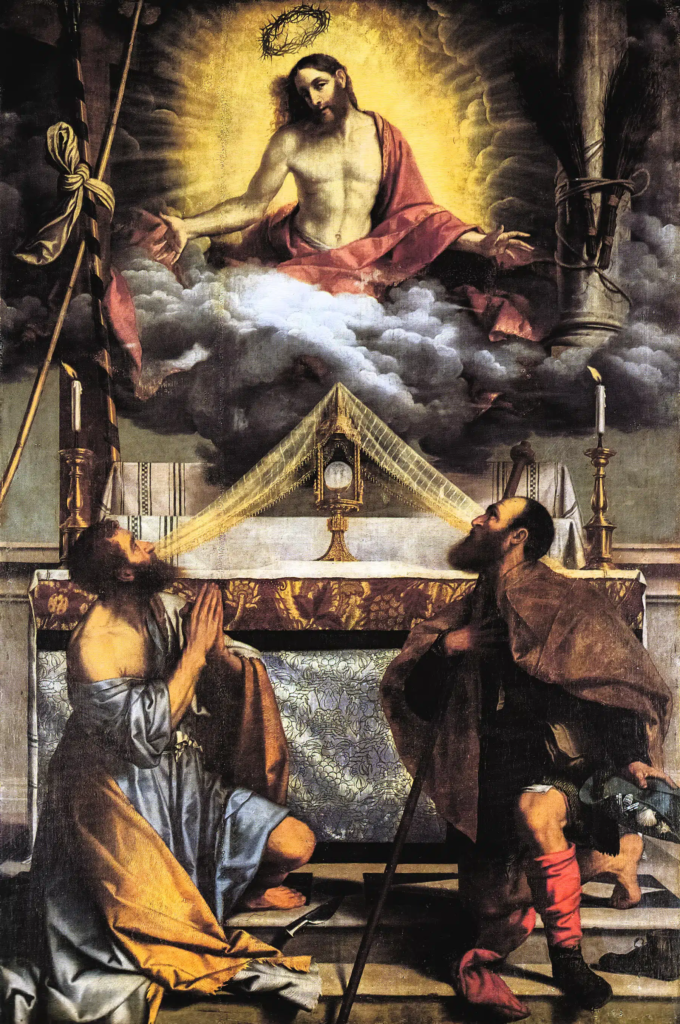
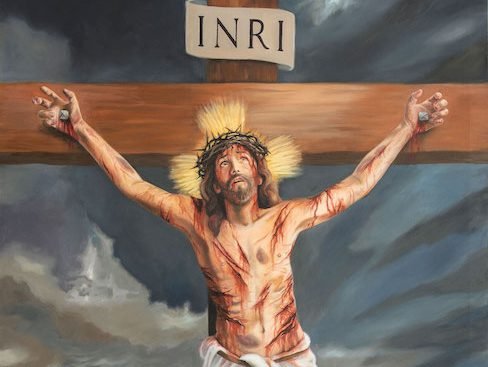
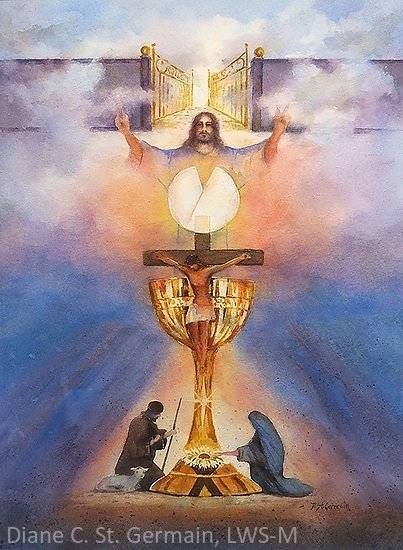
Your mission this week is to … Think about someone who makes sacrifices for you and take moment to thank them for what they do this week.
As we continue our Lenten journey, let us take a moment to reflect on the gift of sacrifice. Just as prayer deepens our faith, sacrifice teaches us selflessness, trust, and a heart willing to surrender for the sake of God and others. It is through sacrifice that we detach from worldly comforts and create space for God’s grace to transform us.
Let us turn to God with open hearts, seeking His strength and guidance as we offer our sacrifices with love, uniting ourselves more fully with Him.
Heavenly Father,
In this sacred season of Lent, draw us closer to You through sacrifice.
Help us to surrender willingly, recognising Your presence in our lives and trusting in Your divine plan.
Teach us to offer our sacrifices with joyful hearts, to embrace selflessness, and to reflect Your love through our actions.
May our sacrifices open our hearts, strengthen our faith, and deepen our love for You and for all Your children.Through Jesus Christ, our Lord.
Amen.



Post Comment